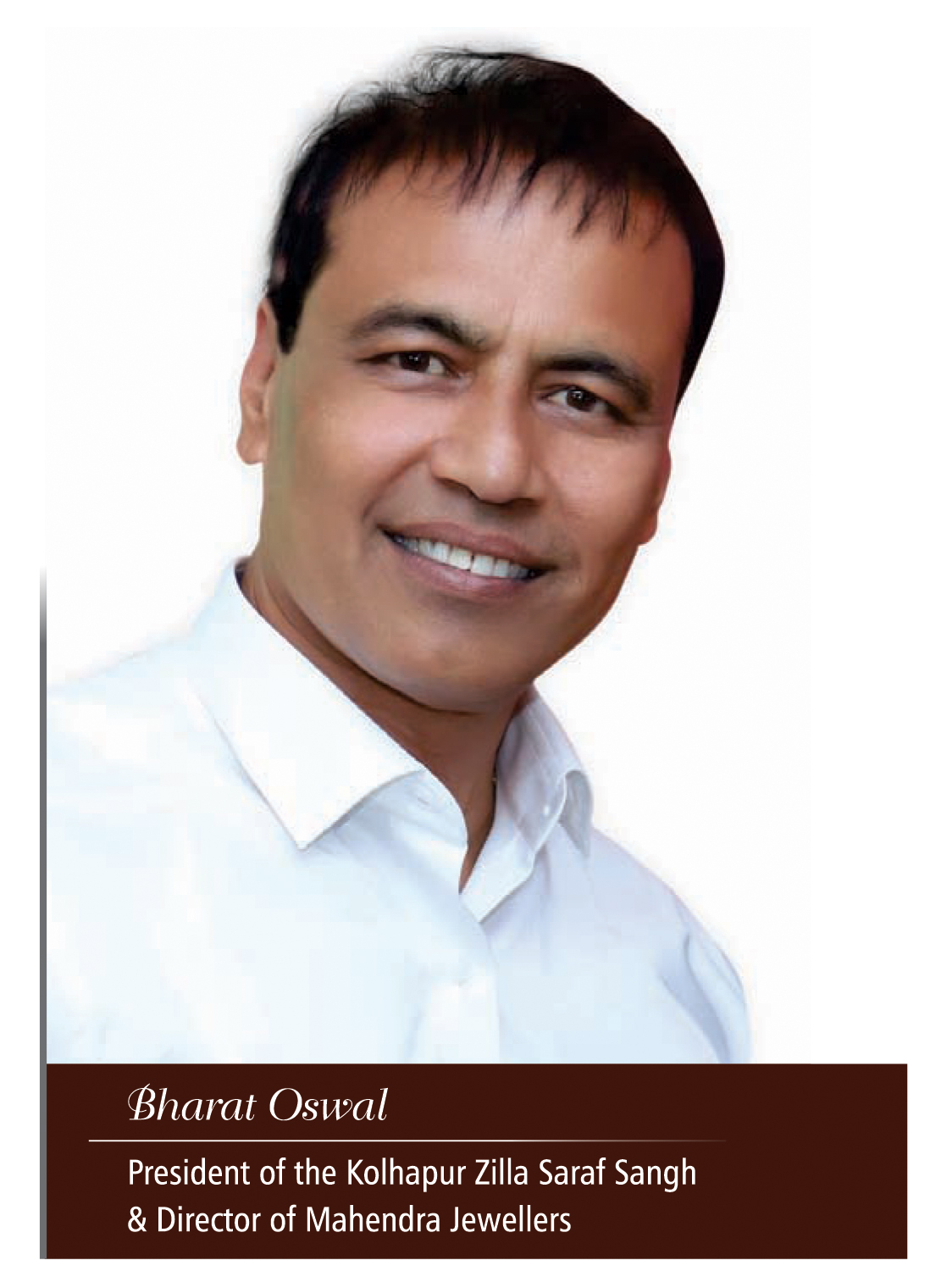
In an exclusive interview with Khushi Shrivas, Special Correspondent, The New Jeweller International Media Group, Bharat Oswal, President of the Kolhapur Zilla Saraf Sangh and Director of Mahendra Jewellers, shares his insights on the evolving jewellery landscape and the legacy of Kolhapur’s craftsmanship. Representing the fourth generation of a 100+ year-old jewellery business, Oswal has been a driving force in promoting traditional artistry while advocating for innovation within the industry. Through his leadership, he continues to champion the cause of artisans and work towards revitalizing the Kolhapur gem and jewellery sector. Excerpts:
Kolhapur is known as the silver hub of India. What are the key reasons behind its development?
Kolhapur’s growth as a jewellery hub is deeply rooted in the visionary leadership of Chhatrapati Shahu Maharaj. Over 100 years ago, he focused on empowering artisans by providing them with training and opportunities. He encouraged the creation of lightweight jewellery such as Kolhapuri Saaj, Tushi, and other traditional ornaments so that even the common man could afford gold. This inclusive approach helped build a strong artisan ecosystem, making Kolhapur a recognised manufacturing centre for jewellery, especially silver.
How has increasing silver prices impacted manufacturers and artisans in Kolhapur?
In reality, rising silver prices have not significantly benefited traditional artisans. Over the last 8 to 10 years, the introduction of machinery has changed the industry. Machine-made jewellery is now widely produced in cities like Agra, Salem, Rajkot, and Nathdwara, creating intense competition. As a result, handmade jewellery is losing its demand, and many artisans are struggling to sustain their livelihoods.
What steps should be taken to support the handmade jewellery sector?
There is a strong need for government intervention and industry support. Initiatives under MSME and state schemes should help artisans gain recognition and adapt to modern trends. A balance between handmade and machine-made jewellery must be established so that traditional craftsmanship can survive. Creating awareness and providing training will help artisans sustain and grow their businesses.
What initiatives is the Kolhapur District Association planning?
The association has previously organized exhibitions and industry programs to educate traders and artisans about market trends. Moving forward, there are plans to organise a large-scale exhibition in September after Ganpati. This exhibition will bring together modern machinery from India and abroad while also showcasing traditional handmade work. The goal is to create collaboration between technology and craftsmanship and revive Kolhapur’s jewellery industry.
Can you share the legacy and history of Mahindra Jewellers?
Mahindra Jewellers has a legacy of over 116 years, starting when the founder arrived in Kolhapur in 1905. Today, the fourth generation is carrying forward the business. Initially focused on wholesale, the brand represents the excellence of Kolhapur’s craftsmanship. The intricate detailing in pieces like Tushi, which contains thousands of tiny beads, showcases a level of artistry that machines cannot replicate.
What makes Kolhapur jewellery unique?
Kolhapur jewellery is known for its detailed handwork and cultural significance. Each piece involves immense effort by skilled artisans. For instance, traditional ornaments like Bugadi are made by assembling multiple tiny components by hand. Despite its uniqueness, this jewellery has largely remained limited to Maharashtra and requires wider promotion to reach national and global markets.
Tell us about the golden palanquin at the Mahalakshmi Temple?
The golden palanquin was a collective effort initiated under the leadership of local authorities and managed by a dedicated team. Devotees from all walks of life contributed gold, from a few grams to several kilograms. Over 1.5 to 2 years, around 26–27 kg of gold was collected, fully tested and hallmarked. Today, the palanquin, valued at approximately £4 million, is used during Navratri processions and stands as a symbol of devotion, unity, and craftsmanship.
What message would you like to share with the industry?
Traditional craftsmanship is a valuable heritage of India and must be preserved. With the right support, promotion, and collaboration between artisans and technology providers, the industry can regain its strength and achieve global recognition.