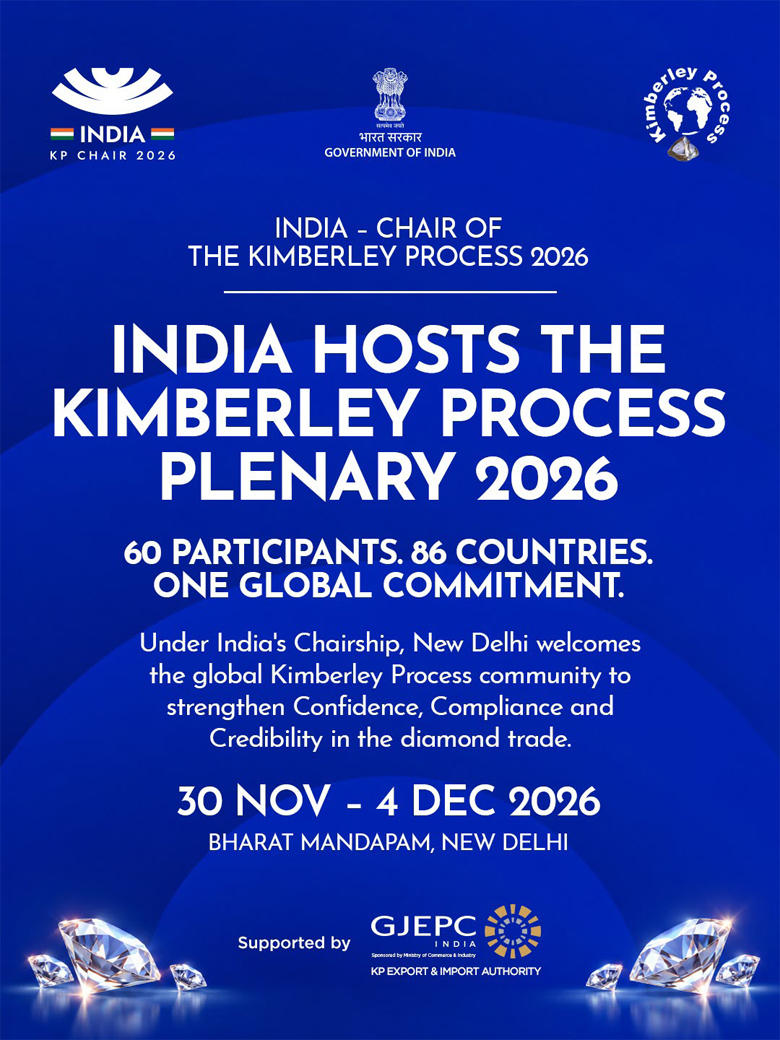
India, the Chair of the Kimberley Process for 2026, will host the Kimberley Process Plenary in New Delhi from 30 November to 4 December 2026. The Plenary will bring together around 350 delegates from over 50 countries across the world, including Government representatives, global diamantaires, policymakers and industry leaders, to deliberate on key issues concerning the global diamond trade.
The Kimberley Process (KP) is a unique tripartite platform that brings together governments, the international diamond industry and civil society coalition with a common objective: to prevent conflict diamonds from entering the legitimate global rough diamond trade. Today, it comprises 60 Participants representing 86 countries and accounts for approximately 99.8% of global rough diamond production and trade.
Keep this words intact, add 2 para as a media in the diamond industry about the history of the KP events, Advantage for India as KP, recent duty-free import of Natural cut, polished, half-cut, or broken diamonds under Chapter 71 weighing up to 25 cents (0.25 carat) per stone.
The Kimberley Process Plenary has historically served as an important platform for international dialogue, bringing together participating governments, the diamond industry, and civil society to discuss the evolving challenges, governance, compliance, and credibility of the global diamond trade. India has previously hosted the Plenary in 2008 and 2019, making the 2026 edition its third time at the helm of this global initiative. The return of the Plenary to New Delhi underscores India's growing role in international diamond trade discussions and its continued engagement in strengthening the Kimberley Process.
For India, hosting the KP Plenary comes at a strategically significant time. As one of the world's leading centres for diamond cutting and polishing, India's Chairship presents an opportunity to strengthen its position in the global natural diamond value chain, promote responsible trade, and reinforce confidence in its manufacturing and export ecosystem. Recent policy developments further reflect this focus, with the Government introducing customs duty and integrated tax exemptions under the Diamond Imprest Authorisation Scheme for eligible imports of natural cut and polished diamonds, including semi-processed, half-cut, and broken diamonds weighing up to 0.25 carat per stone, subject to scheme conditions and export obligations. This policy move is expected to support the industry's access to smaller diamonds and strengthen India's manufacturing competitiveness