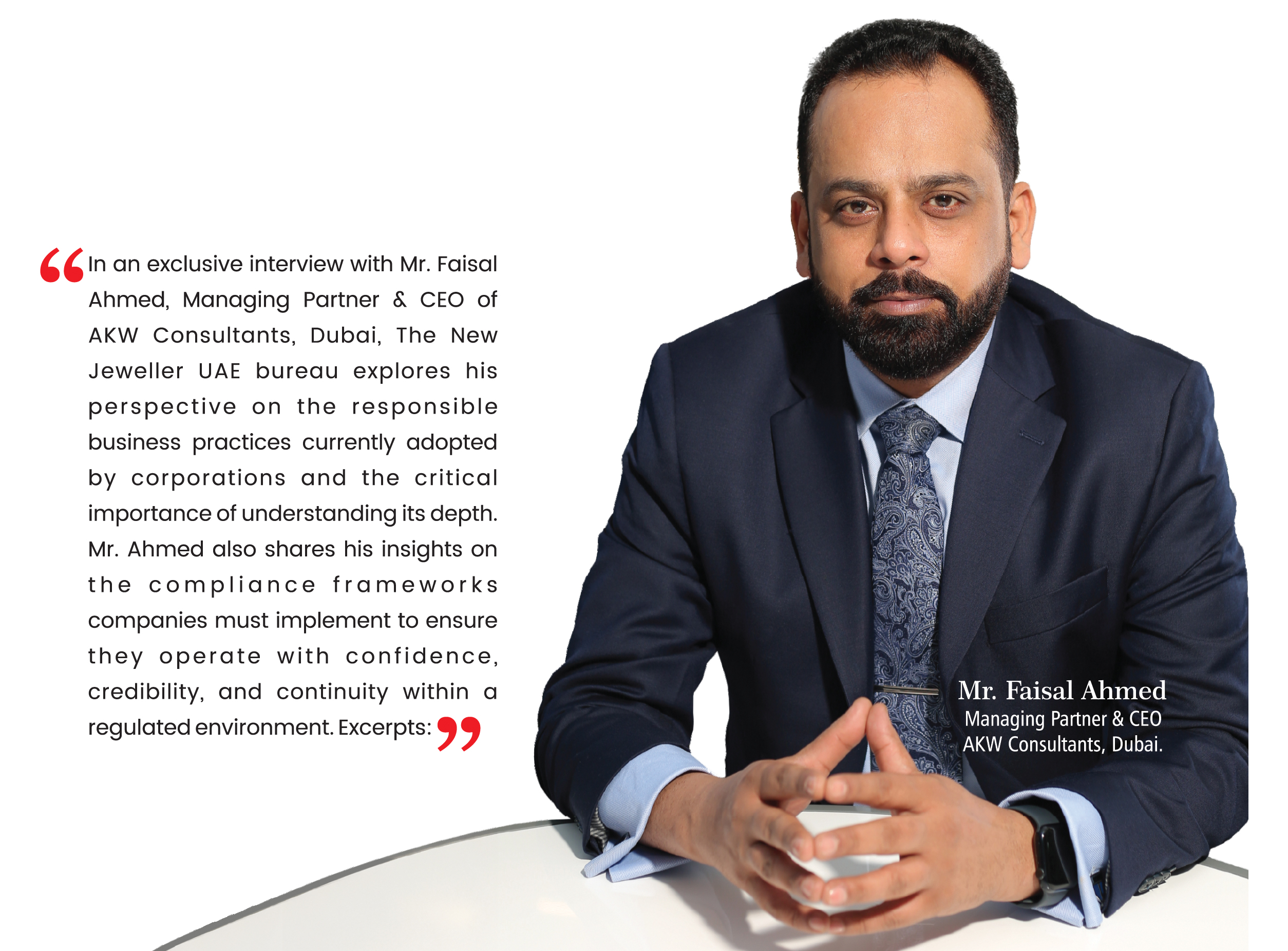
In times of changing business dynamics, what is your view on responsible business practices? What are the key initiatives that will help companies sustain and grow?
Responsible business practices are no longer a peripheral consideration. In a market environment shaped by regulatory scrutiny, geopolitical uncertainty, investor pressure, supply chain disruption, and accelerating technological change, ethics, governance, compliance, and sustainability can no longer function as separate disciplines. They must be integrated into how the organisation actually operates.

My view is that responsible business begins with governance. If leadership is not setting the tone from the top, if accountability is not clearly defined, and if risk ownership is not embedded into decision-making, then even the best-written policies remain superficial. The companies that will sustain and grow are those that move from symbolic compliance to operational discipline. There are a few key initiatives I believe every company should prioritise;
First, a strong governance and risk management framework: clear policies, a functioning control environment, escalation channels, internal accountability, and active leadership oversight. Governance must not sit in a file; it must shape decisions. Second, businesses need to invest in compliance by design, not compliance after the event. Whether the issue is AML, tax, sanctions, data, responsible sourcing, or financial reporting, controls should be built into onboarding, procurement, payments, approvals, and third-party relationships from day one, not retrofitted when a problem emerges.
Third, companies must improve supply chain transparency and third-party due diligence. In a sector such as precious metals, risk often sits outside the four walls of the company. Understanding counterparties, source of funds, source of goods, sanctions exposure, beneficial ownership, and reputational linkages is no longer optional; it is a baseline expectation from banks, investors, and regulators alike.
Fourth, businesses must strengthen financial integrity and reporting discipline. Reliable management information, tax readiness, and audit readiness are strategic assets. They support better decisions, capital raising, lender confidence, and regulatory credibility.
Fifth, companies should look seriously at technology and data visibility. If management cannot see risk in real time, they will always be reacting late. Digital tools, workflow automation, monitoring systems, and AI-enabled compliance processes can improve speed, consistency, and oversight significantly, when implemented responsibly and with appropriate governance.
Finally, and perhaps most importantly, responsible business today requires a longer-term view of reputation and stakeholder trust. Clients, banks, investors, and regulators increasingly ask the same question: can this business demonstrate integrity, traceability, transparency, and control? The businesses that can answer that question confidently are the ones that will be more resilient, more investable, and ultimately more competitive.
Responsible business is not about looking good. It is about building a business that can withstand scrutiny, absorb shocks, and grow without compromising trust.
What is your view on compliance, and how should corporate entities prepare for it? What are the benefits for entities that build strong compliance environments?
Compliance is often misunderstood because many organisations still treat it as a defensive function. I see it differently. Compliance is the discipline of ensuring that a business can operate with confidence, credibility, and continuity in a regulated environment. It is not only about avoiding penalties. It is about building a business that is structured properly, documented properly, governed properly, and capable of standing up to regulatory, investor, banking, and market scrutiny. I would also be cautious with the notion of compliance as a finish line. Regulations evolve, business models change, risk profiles shift, and operating environments become more complex. Rather than thinking in terms of a fixed endpoint, businesses should aim for a mature, continuously monitored, and demonstrably effective compliance environment.
To get there, the starting point is a proper compliance health check: understanding which regulations apply, where the current gaps are, which risks are material, and whether policies are actually reflected in day-to-day practice. There is no shortcut around that honest assessment. From there, the key building blocks are straightforward, though not always easy: a clear compliance framework aligned to the company's sector, licensing structure, geography, and regulatory exposure; robust KYC, due diligence, screening, transaction monitoring, and escalation processes; accurate accounting, tax, and reporting records; strong documentation and audit trails; regular staff training and senior management accountability; internal testing, monitoring, and independent review; and, increasingly, the use of technology to improve consistency, visibility, and reporting discipline.
The real question, however, is not only how to become compliant, but why it matters commercially. The first benefit is trust. A compliant business is easier to bank, easier to invest in, easier to partner with, and easier to scale. In many sectors today, compliance strength directly influences access to markets, counterparties, correspondent relationships, and strategic partnerships.
The second benefit is operational efficiency. When compliance processes are well designed, businesses reduce duplication, improve decision-making, and shorten response times to regulators and auditors, avoiding the disruption caused by lastminute The second benefit is operational efficiency. When compliance processes are well designed, businesses reduce duplication, improve decision-making, and shorten response times to regulators and auditors, avoiding the disruption caused by lastminute remediation.
Third, compliance protects reputation and enterprise value. One weak control, one undocumented transaction, one poorly vetted third party, or one tax failure can create disproportionate damage. Strong compliance reduces that exposure materially.
Fourth, it creates strategic optionality. A business with strong governance, documented controls, and regulatory discipline is better positioned to expand into new jurisdictions, apply for licences, onboard institutional clients, raise capital, or pursue a transaction. Compliance done badly is a burden. Compliance done properly becomes an operating advantage. It creates trust, reduces friction, and gives management the confidence to grow on a more secure foundation.

AKW Consultants has been approved as an LBMA Assurance Provider. How significant is this development for the firm and for your clients?
This is a very significant development, both strategically for AKW and in practical terms for our clients. The LBMA Responsible Sourcing Programme is one of the most important global assurance frameworks in the precious metals market. It plays a critical role in promoting transparency, integrity, and responsible sourcing across the gold and silver supply chain. To be approved as an LBMA Assurance Provider is to be recognised as capable of delivering independent assurance under a framework that carries real international credibility. AKW is now among a select group of firms globally entrusted with this role. For AKW, this approval reflects the depth and seriousness of our work across responsible sourcing, regulatory compliance, governance, and assurance within the precious metals ecosystem. It reinforces our position not only as advisers but as an independent assurance provider trusted to operate within one of the market's most demanding responsible sourcing environments. It is the result of sustained investment in expertise, methodology, and sector understanding built over years of engagement with refiners, traders, regulators, and market participants across high-risk sourcing environments.
For clients, the significance is very practical. It means they can work with a firm that understands the technical requirements of assurance, but also understands the operational realities of refiners, traders, and market participants working across complex and cross-border sourcing environments. Responsible sourcing today is not simply about having a policy. It is about implementation, traceability, documentation, risk identification, and the ability to evidence that your systems actually work in practice. The benefit of AKW's LBMA ASP approval is that clients gain access to a team combining regulatory understanding, precious metals sector knowledge, AML and due diligence expertise, and practical implementation experience. We bring together disciplines that too often remain siloed: financial crime compliance, supply chain intelligence, governance design, and audit rigour, precisely because responsible sourcing demands all of them.
It is also significant because the market is changing. The LBMA's new Disclosure Guidance Version 3, effective from January 2026, requires refiners to publicly disclose supply chain identities in red flag locations, all WGC-affiliated miners and mines, and all countries from which mined material is received. These are not marginal changes. They reflect a fundamental shift in what the market expects from credible responsible sourcing programmes.
Banks, counterparties, regulators, and investors increasingly want to see not only that a company says the right things, but that it can withstand independent scrutiny. In that environment, credible assurance is a strategic asset, not a box-ticking exercise. For us, this approval is not simply a badge. It strengthens our ability to support refiners and other market participants in building sourcing frameworks that are robust, auditable, and aligned with global expectations. And for clients, it means engaging with a partner that understands both the compliance obligation and the commercial importance of getting it right.
What are the key factors behind the growth of AKW Consultants, not only in the Middle East but globally?
AKW's growth has been driven by a combination of credibility, relevance, and execution.
First, the firm was built around real regulatory and commercial experience. Our leadership team has worked inside global institutions, Big Four firms, regulated environments, and highstakes sectors. That matters because clients do not need theoretical advice. They need advisers who understand how regulators think, how businesses operate under pressure, and how to translate complex obligations into practical action.
Second, we have been deliberate about where we operate. AKW has focused on sectors where regulation matters the most: financial services, precious metals, real estate, digital assets, fintech, and other scrutiny-intensive environments. These are industries where clients need more than generic consulting. They need specialist judgment, sector-specific knowledge, and a team that has worked through the problems they are facing.
Third, our model has always been senior-led and implementationfocused. We do not believe in producing reports that sit on shelves. Clients come to AKW because they need clarity, but they also need delivery: whether that is building an AML framework, preparing for a regulatory inspection, conducting a responsible sourcing review, supporting a tax restructuring, or standing up a cross-border compliance programme. Execution is where advisory firms are ultimately judged.
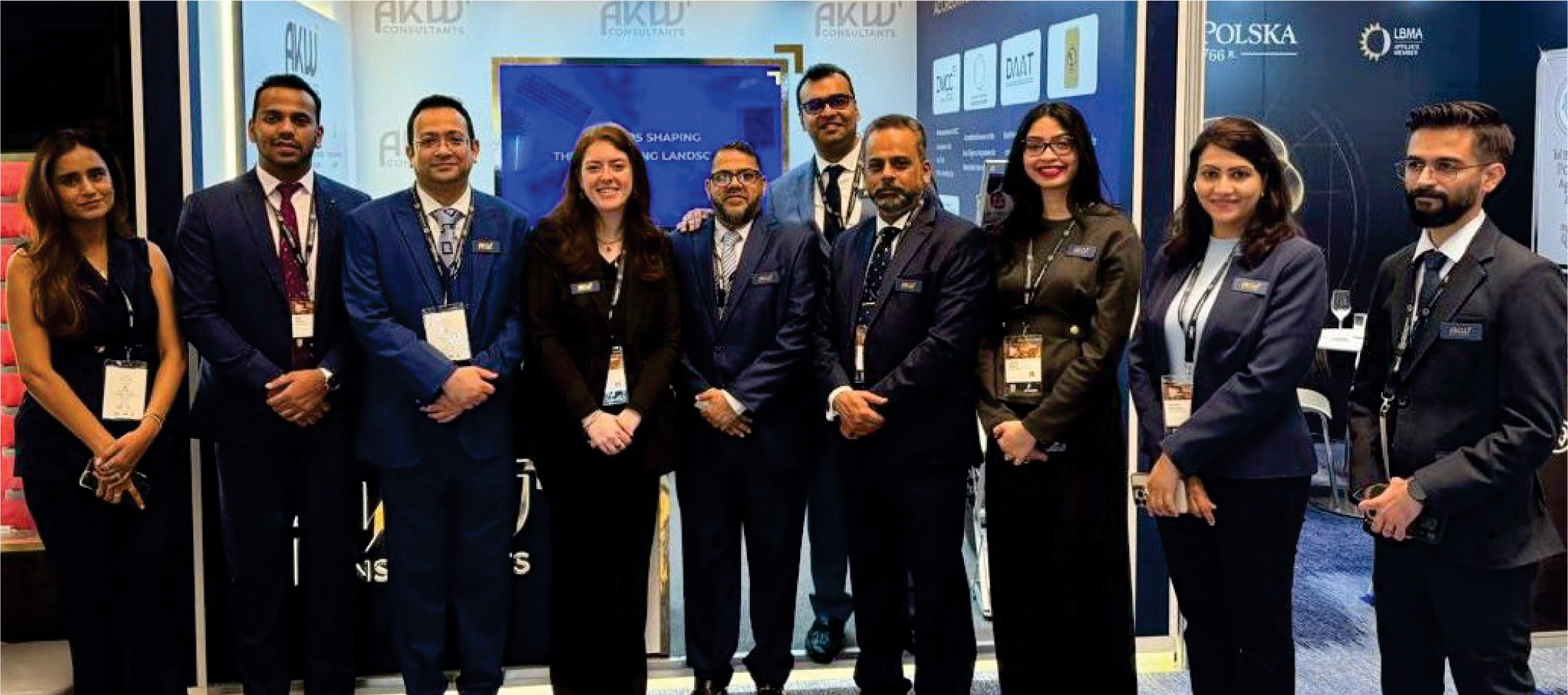
Fourth, our growth has come in part from bridging multiple disciplines under one roof. Today, client challenges are rarely isolated. A tax issue may also be a governance issue. A responsible sourcing challenge may involve AML, third-party risk, and audit readiness simultaneously. A market entry plan may require licensing, compliance, accounting, and operating model design. Our integrated approach allows us to solve problems in a more commercially coherent way, without the friction of coordinating multiple advisers across separate mandates.
Fifth, trust and relationships have played a fundamental role. Much of our growth has been built through referrals, long-term client relationships, regulator-facing credibility, and sector reputation. In complex regulated markets, trust is earned over time by being consistent, discreet, technically strong, and dependable under pressure. That is not something that can be replicated quickly.
Finally, we have been willing to evolve. Regulatory expectations are changing quickly, and so are client needs. We have expanded our capabilities across responsible business, ESG-linked advisory, technology-enabled compliance, cross-border strategic support, and assurance, because clients increasingly need joined-up
solutions. AKW has grown because clients trust us with problems that are commercially important, regulatory in nature, and operationally complex. We have built the firm specifically to solve those kinds of problems.
Artificial Intelligence is increasingly central to global business. How does AKW Consultants advise clients on AI integration and its implications?
At AKW, we do not view AI as a fashionable technology layer to be added for its own sake. We look at AI from a business, governance, and risk perspective. The real question is not whether a company should use AI. The real question is where AI can create measurable value, and how to implement it responsibly. For many businesses today, especially those operating across multiple jurisdictions, large transaction volumes, high documentation burdens, or complex compliance obligations, AI can be genuinely transformative. It can improve monitoring, reduce manual review time, support document analysis, enhance due diligence workflows, strengthen exception reporting, and create better management visibility across compliance and finance processes. The efficiency gains in welldesigned compliance environments are real and material.
At the same time, AI introduces its own risks: governance risk, data risk, model risk, privacy concerns, accountability questions, and the danger of over-reliance on automation without adequate human oversight. Our advice to clients is always balanced. Use AI where it improves speed, quality, consistency, and insight, but do so within a framework of controls, documentation, testing, and management oversight. The governance of AI is as important as the governance of the processes it supports. In practical terms, AKW advises clients on where AI and technology can support compliance operations, KYC and onboarding, policy review, accounting workflows, reporting automation, audit preparation, and risk monitoring. We also help clients think through the governance side: who owns the process, how decisions are reviewed, how outputs are validated, what data is being used, and what level of assurance management needs before relying on those outputs.
The direction of travel is clear from what we see across the sectors we serve, and from the broader market. The LBMA, for example, launched a precious metals-specific AML/CTF e-learning programme in 2026, recognising that as regulatory expectations around data, governance, and risk-based approaches continue to evolve, accessible and consistent training infrastructure becomes as important as the frameworks themselves. Technology is becoming embedded in how compliance is delivered, not just how it is monitored.
AI will increasingly become part of mainstream business infrastructure, particularly in compliance, finance, and operational control environments. But the organisations that benefit most will not be those that adopt AI fastest. They will be those that adopt it most intelligently, with a clear business case, a controlled implementation model, and a proper understanding of the regulatory and operational implications. AI should strengthen judgment and control, not replace them.
What are the capabilities of AKW Consultants for clients outside the UAE, and what are your expansion plans?
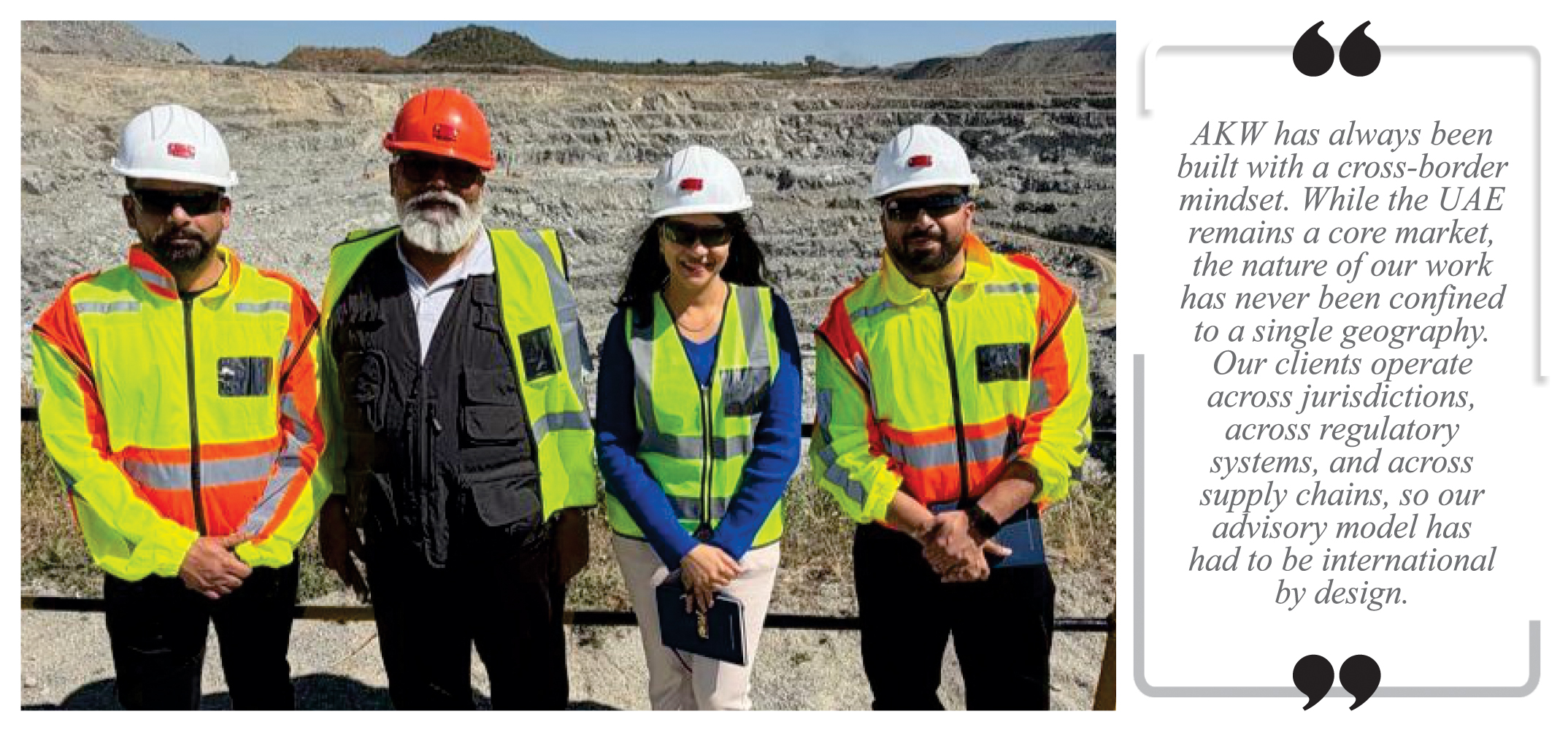
AKW has always been built with a cross-border mindset. While the UAE remains a core market, the nature of our work has never been confined to a single geography. Our clients operate across jurisdictions, across regulatory systems, and across supply chains, so our advisory model has had to be international by design.
From a capability perspective, we support clients outside the UAE across multiple dimensions. Our team has direct experience advising organisations across a wide range of jurisdictions and regulatory environments, covering financial crime compliance, responsible sourcing, governance, tax structuring, audit readiness, and strategic risk. My own advisory work spans more than fifty countries, and that international exposure shapes how AKW approaches client problems, with a strong understanding of how regulatory expectations interact across different legal systems and market contexts.
Many of the sectors we serve are inherently global: precious metals, digital assets, financial services, trade-linked businesses, cross-border investment structures, and internationally active family groups. These clients are often dealing with overlapping obligations simultaneously: local regulation, banking expectations, investor due diligence, sanctions exposure, tax considerations, and international assurance requirements. Our role is to help them navigate that complexity in a joined-up way, rather than addressing each obligation in isolation.
AKW's model supports both inbound and outbound needs. We advise international businesses entering or expanding into the UAE and GCC, and we also support UAE-based and regional businesses as they strengthen governance, compliance, and reporting structures for international counterparties, investors, and market access requirements.
In terms of expansion, our approach is deliberate rather than opportunistic. We are focused on growing in areas where there is genuine demand for specialist regulatory, assurance, and responsible business advisory: strengthening our presence across the precious metals ecosystem, regulated financial and digital asset sectors, and cross-border governance and risk mandates.
We are also building deeper capabilities in technology-enabled compliance, responsible sourcing assurance, and strategic support for internationally active businesses as these areas attract increasing regulatory attention.
The expansion plan is not simply about adding offices or geographies. It is about expanding AKW's relevance in markets and sectors where regulatory complexity is increasing and where clients need senior-led advice that combines technical depth with practical execution.
Accounting and audit are fundamental to every business. How does AKW Consultants make these disciplines more accessible for clients?
One of the most common mistakes businesses make is assuming that accounting and audit only become important at year-end or when an external auditor arrives. In reality, accounting is one of the foundational disciplines of a healthy business. If reporting is inconsistent, reconciliations are delayed, or tax records are incomplete, that weakness flows into compliance, Decision-making, valuation, and operational control. It rarely stays contained.
At AKW, we approach accounting and audit in a practical and structured way. For some businesses, that means helping establish the accounting foundation itself: chart of accounts, bookkeeping discipline, financial reporting routines, documentation standards, VAT and corporate tax readiness, cloud accounting systems, and internal ownership of key finance processes. For others, it may mean cleaning up historical backlogs, correcting records, preparing for statutory audit, improving management information, or supporting finance teams through IFRS and compliance requirements.
Our role is not only to manage the books or support the audit. It is to build a finance environment that is reliable, scalable, and decision-useful. Strong financial infrastructure enables management to lead with confidence, not react to surprises. On the audit side, we help clients prepare in a way that reduces stress and avoids last-minute disruption. That includes reviewing the quality of records, reconciling key balances, identifying control gaps, ensuring supporting documents are available, coordinating with auditors, and making sure management understands the issues before they become audit findings. Where needed, we also support internal audit, forensic review, financial statement audit preparation, and sector-specific assurance work. The reason clients find this particularly valuable is that we bridge the gap between accounting, audit, compliance, and business reality. A finance issue is rarely just a finance issue. It can affect tax, licensing, investor reporting, banking relationships, internal control, and regulatory exposure. Because AKW works across those disciplines, we are able to help clients solve the wider problem rather than one part of it.
We advise from the basics where that is what is needed, but always with the objective of moving the client toward a stronger, more mature finance and control environment that supports both compliance and growth.
What are the most significant challenges companies face today, and how does AKW act as a catalyst for their success? Please share some illustrative examples.
Businesses today are operating in a far more demanding environment than they were even a few years ago. The challenge is not simply that regulation is increasing. It is that risk is becoming more interconnected, and the cost of being unprepared is rising faster than most management teams recognise until something goes wrong. One of the most consistent patterns I see is the gap between intent and implementation. Most organisations are not non-compliant because they lack awareness or good intentions. They are exposed because they have not translated regulatory understanding into operational reality: into controls that function day to day, documentation that holds up under scrutiny, governance structures that are lived rather than written, and finance functions that give management genuine visibility rather than a retrospective picture. That gap is where risk concentrates, and it is where we spend a significant part of our time working with clients.
In the precious metals sector, this plays out in a particularly acute way. Responsible sourcing frameworks have become considerably more demanding. The industry has moved well beyond the question of whether a refiner or trader has a policy. The question now is whether the evidence supports what is being claimed: whether the due diligence is proportionate to the risk, whether traceability is demonstrable across the supply chain, and whether the assurance process would withstand a serious independent review. We have supported a number of market participants through exactly this challenge, where the issue was not absence of commitment but the absence of a sufficiently structured, evidence-based framework to substantiate it. Building that kind of credibility requires bridging compliance, AML, sourcing intelligence, and audit disciplines simultaneously, because none of them is sufficient on its own.
A second pattern, and one that cuts across every sector we serve, is growth outpacing governance. Businesses that expand commercially at speed frequently find that their compliance and finance infrastructure has not kept pace. We see this repeatedly: KYC processes that were designed for a smaller counterparty base being stretched past the point of reliability, accounting systems that worked for a simpler structure becoming a source of risk as the business scales, and internal governance that was adequate for a founder-led organisation becoming inadequate as the stakeholder base widens. The business has grown; the controls have not. And often it is only when a regulator, auditor, lender, or potential partner applies external pressure that the gap becomes visible. By that point, remediation is more costly and more disruptive than it would have been if the investment had been made earlier. The most commercially effective compliance is almost always the compliance that is designed ahead of the problem, not in response to it.
The third challenge I would highlight is fragmentation: fragmented data, fragmented ownership, fragmented documentation. In practice, this means that when a business needs to respond to a regulatory query, prepare for an audit, complete a due diligence exercise, or support a transaction, the information required is scattered, inconsistent, or simply not in the form that is needed. This is not a technology problem. It is a governance and discipline problem, and it affects businesses of every size. We have worked with mid-sized businesses where the accounting records, the compliance documentation, and the tax filings were each maintained in relative isolation from the others, creating avoidable exposure across all three when external scrutiny arrived. The intervention in those cases is rarely dramatic. It is systematic: rebuild the records, align the reporting, establish clear ownership, and put in place the discipline that prevents the same fragmentation from re-emerging.
Finally, and perhaps most structurally important, is the challenge of market entry and cross-border complexity. The UAE continues to attract international businesses and entrepreneurs from across the world, and that is a genuine testament to what this market offers. But entering a market with overlapping federal, free zone, and sector-specific regulatory obligations, while simultaneously managing banking access, tax structuring, AML compliance, and governance requirements, is not straightforward. We have supported international clients through that process end to end, and what consistently makes the difference is integration: approaching structure, compliance, accounting, and governance as a single workstream rather than as parallel tracks that get reconciled later. A business that enters a new market with a properly integrated foundation is more resilient, more bankable, and more attractive to counterparties from day one.
What ties all of this together is a conviction I have held throughout my career: complexity is manageable when it is understood clearly and addressed systematically. AKW's role is not simply to identify what is wrong. It is to help management understand why it matters, what the priority sequence should be, and how to build something that will hold. That is what we mean by advisory that accelerates growth.