This is the second article in our six-part series on how Digital Product Passports are reshaping the luxury industry. In the first edition, we explored why provenance, trusted data and digital identity have become genuine business assets. Here we turn to the most consequential strategic decision a luxury house will make this decade: whether to bet the future of your brand on a single technology.
The decision facing every house this year
A Digital Product Passport is no longer a question of whether, but of when and how. Regulation is arriving, consumers are asking sharper questions, and the secondary market increasingly rewards houses that can prove exactly what they sell. A verifiable digital identity will soon be expected of any serious luxury product, much as a hallmark or grading report is expected today.
The harder question is the one most houses have not yet confronted. When your creations carry a digital identity, who controls it? Who holds the data? And what happens when the technology you committed to is no longer the technology the industry has standardised around? This is where a large part of the market is about to make the same expensive mistake.
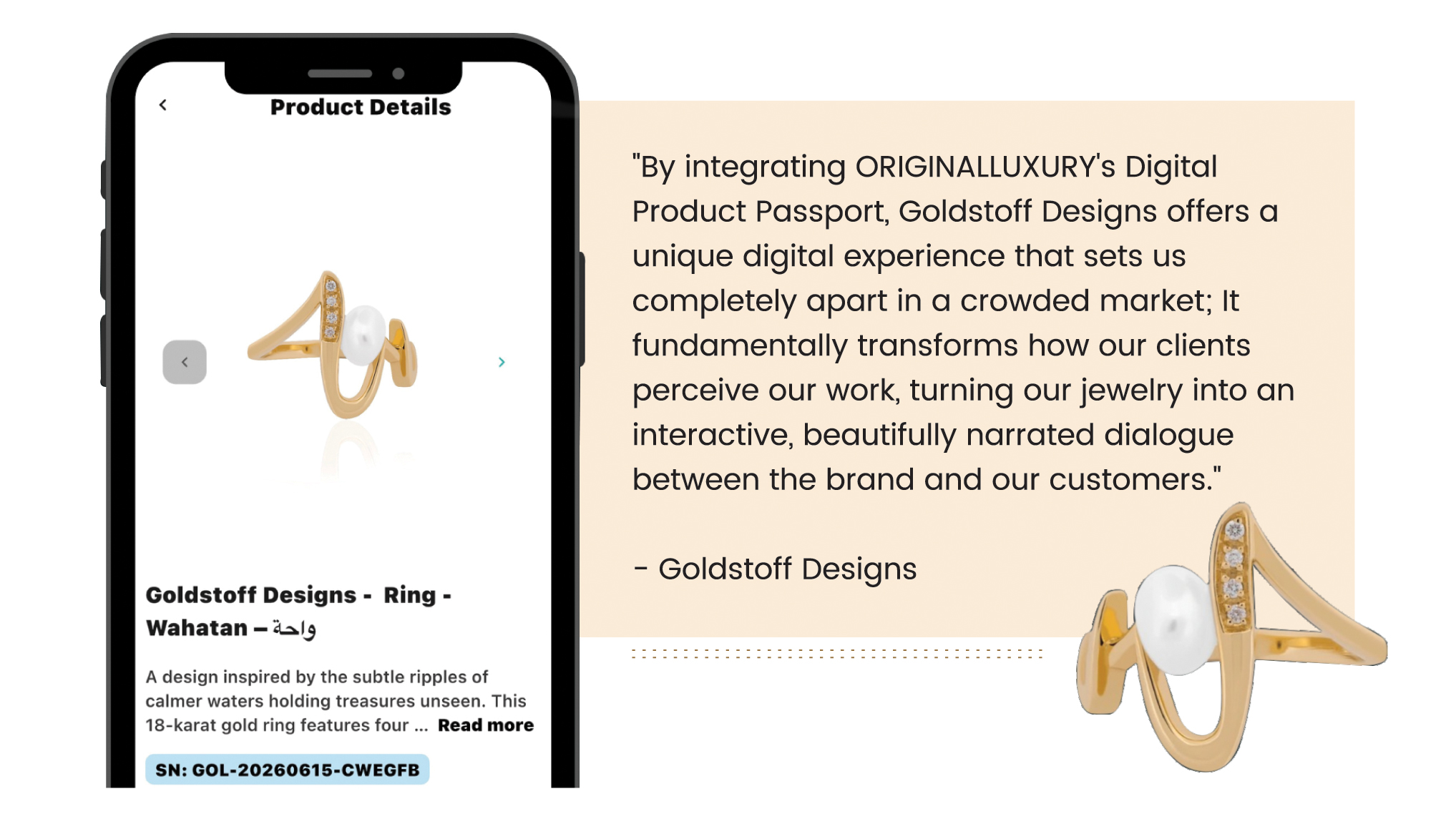
The trap of the single solution
It is tempting to meet a new requirement with a single, selfcontained product. One vendor, one contract, one platform that promises to do everything. One trap.
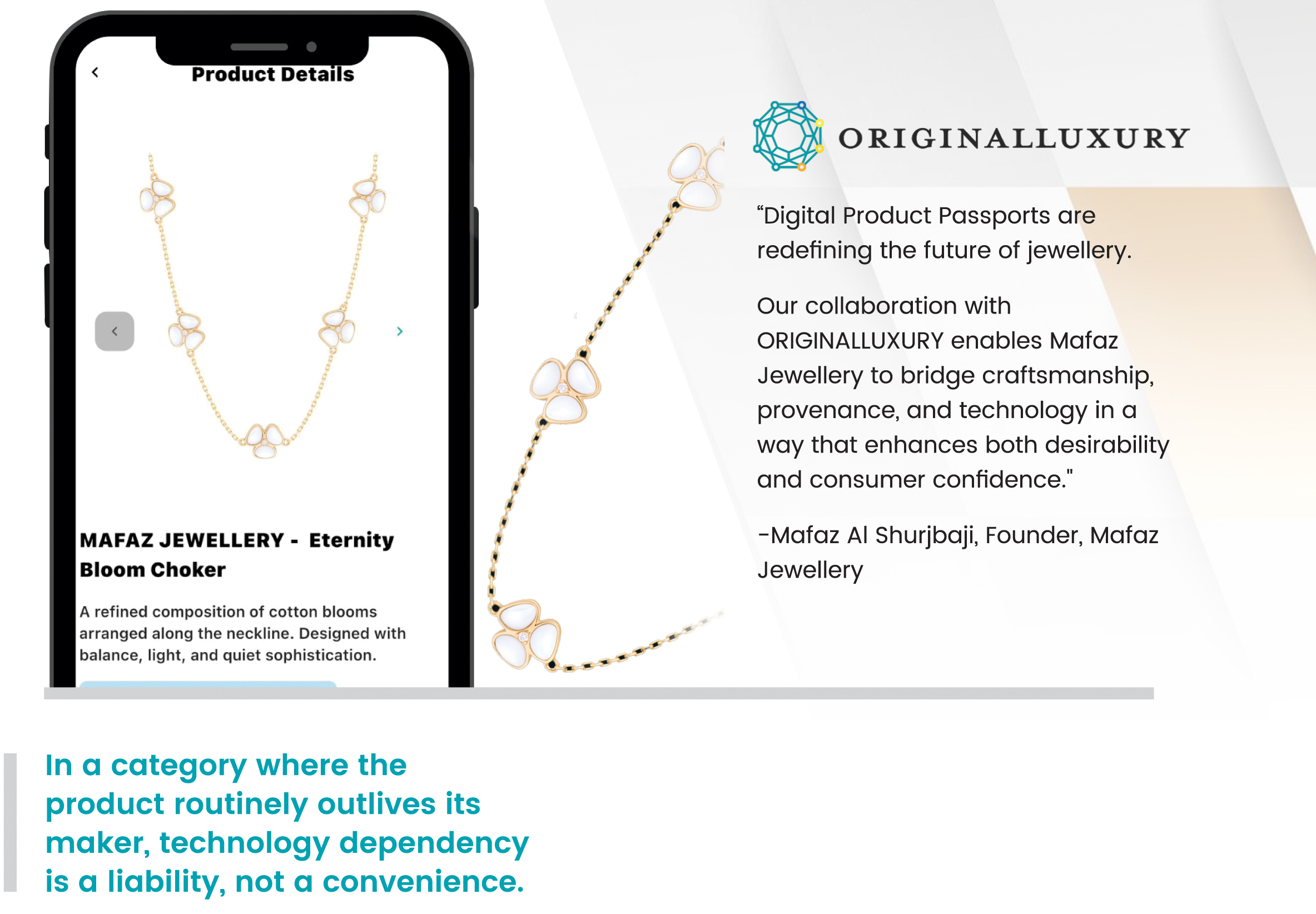
A passport built on one proprietary technology is bound by the lifespan and commercial interests of the company that built it. Commit your brand to it, and you inherit its limitations. There is a name for this quiet erosion of freedom: technology dependency. In a category where the product routinely outlives its maker, it is a liability rather than a convenience.
No one company can tell the whole story
Consider what a fine piece of jewellery actually is: the right stones, the most appropriate metal, flawless craftsmanship, and the trusted name that brings them together. A diamond may originate in one country, be cut and polished in another, graded by an independent laboratory, set elsewhere, sold on a different continent, and finally passed to a new generation. Each participant contributes a piece of the truth. Yet no organisation owns the complete picture - only the owner of the finished piece ever does.
The real challenge is not building one more technology platform. It is creating an environment where trusted, verifiable information from many sources comes together into a single record, while every contributor continues to do what it does best.
From competition to collaboration
For years, technology companies have built impressive solutions to specific problems: supply chain traceability, authentication, certification, data integrity, consumer experience. The future of luxury will not be built by replacing all of them with one universal system. It will be built by allowing the best of these technologies to work together.
This conviction sits at the heart of ORIGINALLUXURY. We are technology neutral by design - our role is to bring the best available solutions into a single, common Digital Product Passport environment. For the houses we work with, that neutrality is protection. You never gamble on a single supplier, and you gain the strengths of many specialists without surrendering your freedom to any one of them.
Five pillars, one passport
Within the ORIGINALLUXURY ecosystem, partners contribute across five complementary areas:
Traceability. Capturing the journey of products and materials through global supply chains.
Authentication. Verifying the identity of diamonds, gemstones, precious metals and finished jewellery.
Certification. Trusted grading reports and independent assessments connected directly to the passport.
Data integrity. Systems that keep the record secure, chronological and tamper-resistant for decades.
Consumer interface. Technologies that turn technical data into meaningful experience and lifelong engagement.
Brought together, they create something no single vendor could build alone: a connected, enduring and transferable Digital Product Passport.