




UAE moves an estimated $170 billion in gold every year. By most measures that makes it the second-largest bullion hub in the world, behind only Switzerland, with somewhere between 13 and 15 percent of all the gold traded globally passing through the country at some point in its journey. For a market of that weight, one thing has been oddly absent: a single institution to represent it, and a collective voice to carry its concerns to the people who write the rules.
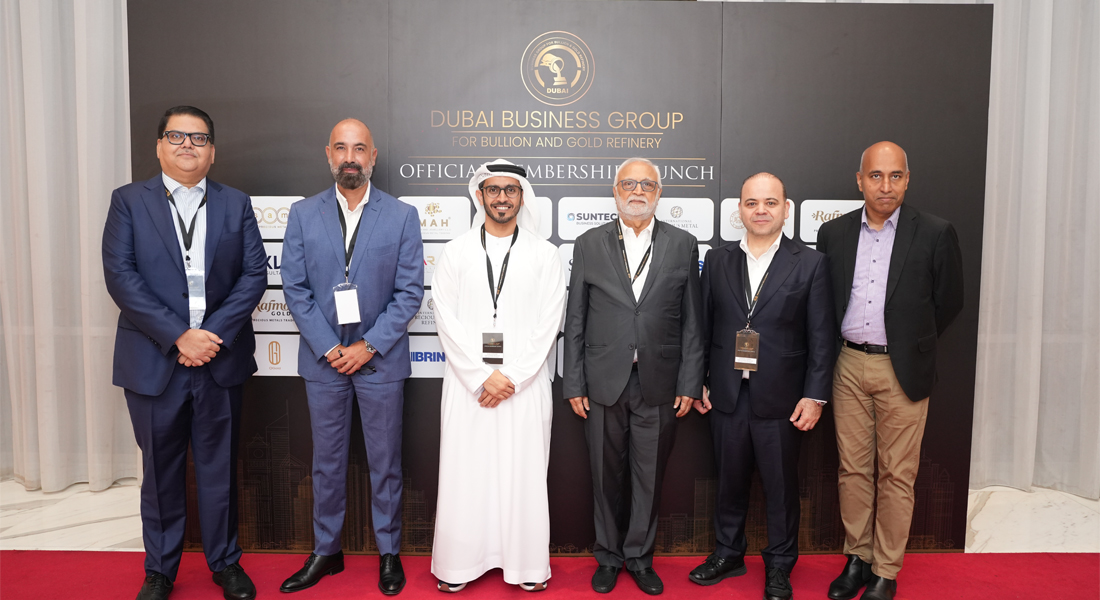
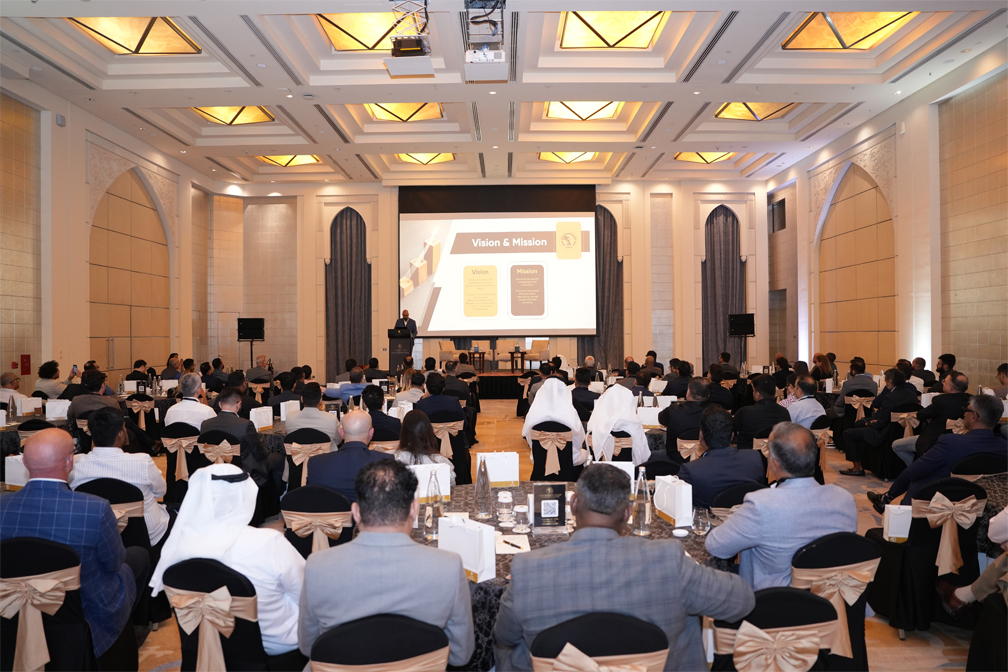
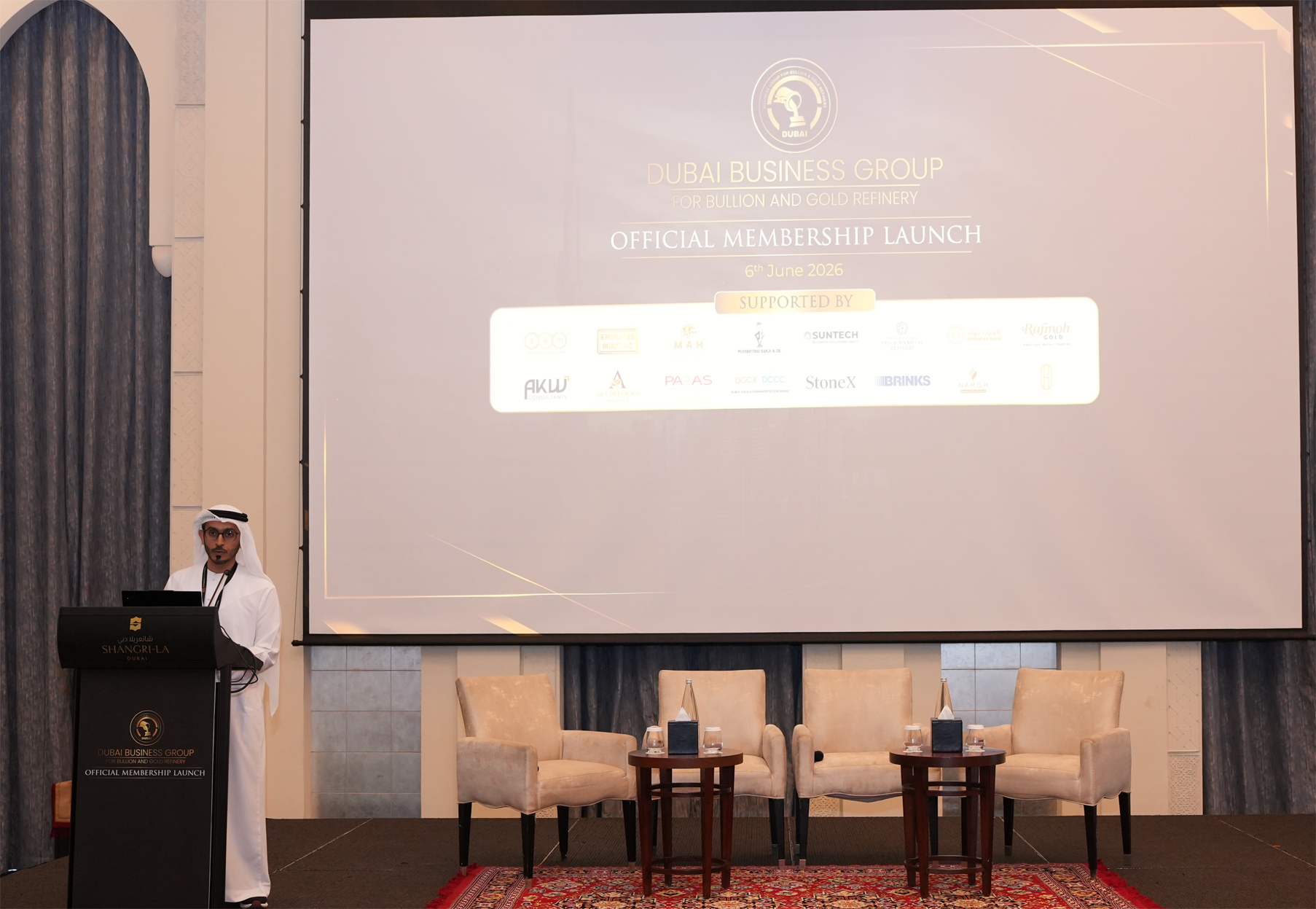
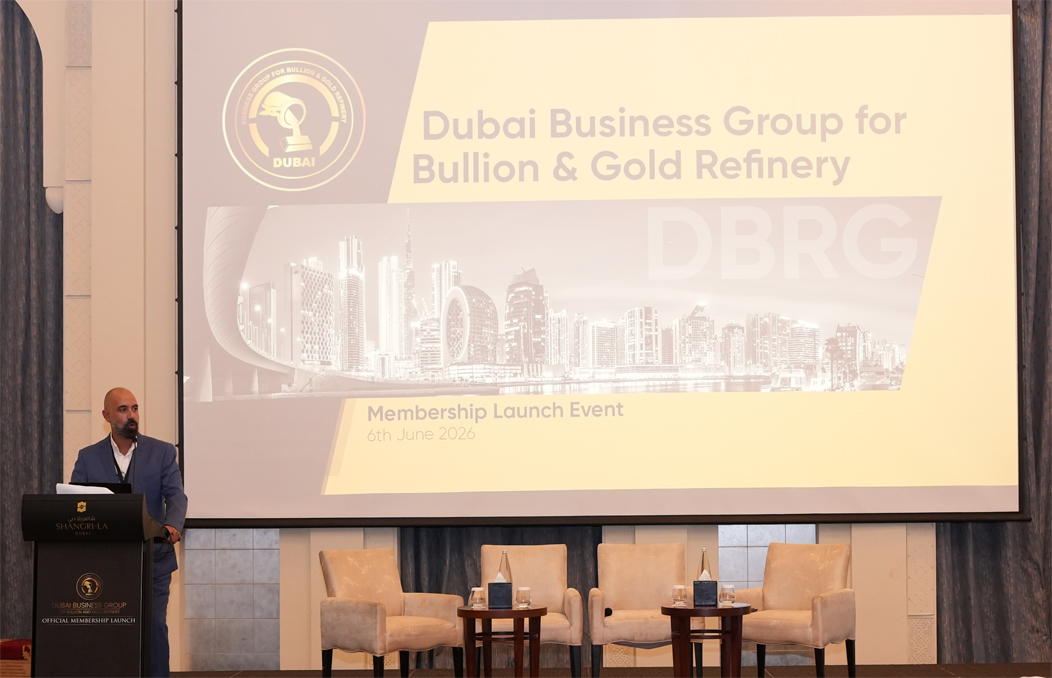
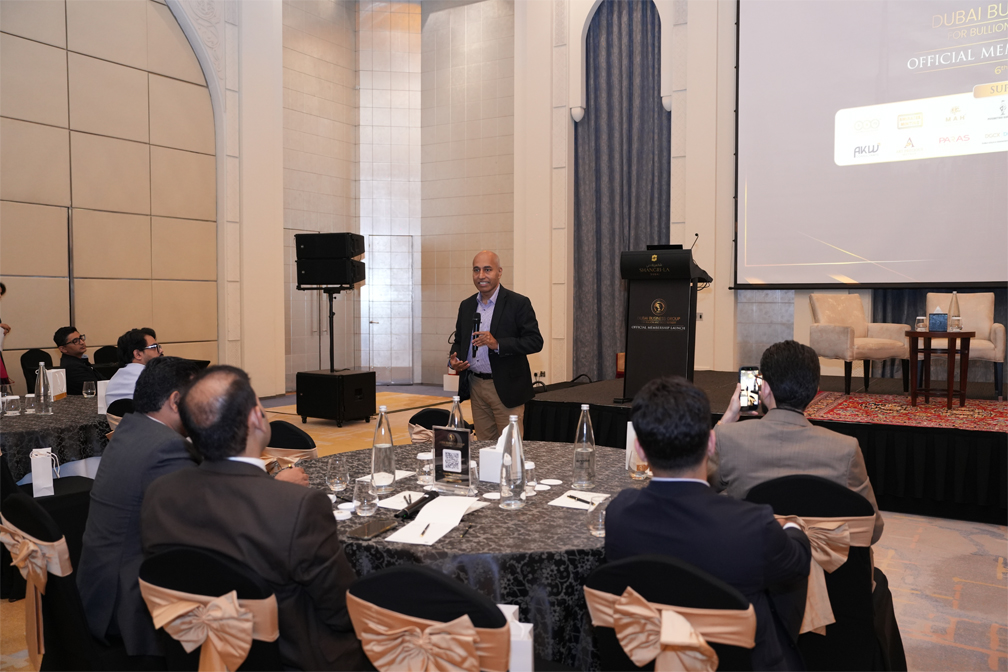
On 6 June, that gap began to close. The Dubai Business Group for Bullion and Gold Refinery, (DBRG), held its formal membership launch at Shangri-La, Dubai and opened its doors to traders, refiners, banks, logistics firms and consultants from across the precious metals value chain. Established under Dubai Chambers in 2024, the group had spent its early life building the framework. The launch was the moment it invited the wider industry in.
Twenty years of growth, with no scaffolding
The case for DBRG starts with a number that has surprised even people inside the trade. In 2005, UAE gold trade stood at roughly $30 billion. By 2024 it had grown sixfold to around $170 billion, a 27 percent jump in that final year alone. It is the kind of expansion most markets would envy. The catch is that it happened almost by accident, without the institutional architecture a market of this size would normally be built on.
“The growth from 2005 till 2024 was amazing. UAE now is the second largest hub in the world,” said Mohammad Ayyob, Chairman and one of DBRG’s founding board members. “To sustain it and grow more, we need a voice to be heard.”
That theme, growth that has outpaced its own structure, ran through the evening. Anshuman Sharma, the group’s General Secretary, put it plainly. “This is all grown in a very informal way and in an unorganic manner. Now what we are trying to achieve is to create a platform where the industry can come together. And hopefully what took us 20 years to reach six times, we should be able to get that in a much shorter period.”
The membership launch, then, is less a celebration of how far the UAE’s gold trade has come and more an argument about how it gets to the next stage. The founders are betting that the next leg of growth won’t come from volume alone. It will come from organisation. The
Why the timing matters
If the launch felt overdue to some, the people behind it argue the timing is right. The global gold market is under pressure from several directions at once. Anti-money-laundering and responsible-sourcing rules keep getting tighter. Geopolitical disruption keeps rerouting logistics corridors. And questions linger about whether bullion businesses can count on stable banking access. Each of those is hard to face alone. Together they make the case for a body that can speak for the whole sector.
The banks, notably, see the value. Satheesh Sreedharan, Head of International Sales and Precious Metals at Emirates NBD, framed DBRG as the missing counterpart to the institutions already in the market. “What was missing is a representation, a self-regulated association that represents and creates a best practices platform. DBRG fills that space. It gives us, as an institution, eyes into the industry.”
For traders, the appeal is more immediate. Mitul Mehta, Director at Art Precious Metals, pointed to the everyday confusion of operating in a fast-moving regulatory environment. “The coordination of laws between business and government. A lot of businesses are confused about what is right and what is wrong. This group can become that place where you can ask individual questions and at the same time give an industry-wide view.”
From the logistics side, where so much of the trade’s stability actually lives, Nelson Vargas, Regional Sales Director at Brinks, was candid about how fragile the supply chain can be. “The logistics is the main factor for the market to have stability and continuity. Uncertain moments, where we don’t have proper logistics, proper airlines working to certain destinations, makes the process more complicated.” His point landed with a room that has watched grounded flights and closed corridors hold up shipments more than once.
Products on the floor
The launch was not only about intent. DGCX, the Dubai Gold and Commodities Exchange, used the platform to announce concrete steps. A DMCC entity with two decades in the market and one of the region’s largest commodity exchanges, DGCX unveiled a same-day-settled spot contract and a partnership with DBRG aimed at building market depth.
Nagendra Kumar, Deputy CEO of DGCX, set out the detail. “We are going to launch a spot contract on the 22nd of June. . The whole idea is how do we consolidate liquidity on one centralised platform? When you consolidate liquidity, you have multiple buyers and sellers, diversification, better governance, better price discovery. This will be the first of its kind in the entire region.” The exchange, he added, wants to “closely work with the DBRG team and see how we can build the market together.”
The contract sits alongside DGCX’s broader push toward dirham-denominated, physically deliverable gold contracts, part of a wider ambition to anchor a regional price benchmark in the UAE itself.
More than a network
What separates DBRG from a conventional trade association is the mandate it has written for itself. The group does not just want to convene members and host events. It wants to act as a two-way bridge, carrying the industry’s concerns up to regulators and bringing incoming regulation back down to members for review before it lands.
Essa Al Falasi, Vice Chairman, described the model directly. “We will be the voice of the market, the network between not just the business and the government, but vice versa as well. If there is any new law which will be introduced, it will come through us for review with our members.” For a sector long used to learning about rule changes after the fact, that promise of advance consultation is no small thing.
The fragmentation the group hopes to fix was a recurring note. Abidh C.P., General Manager at Ahlatci Metal Refinery, spoke to the refiners’ frustration. “The market has been fragmented. We have associations here, but we have never been in a collective group. The group’s bargaining power is what is expected from the group in the next two years.”
Membership is not limited to the headline players, and that matters. Faisal Ahmed, CEO of AKW Consultants, stressed how wide the net is being cast. “It’s about inclusion of different stakeholders across the industry, not just the bullion traders or refiners alone. You have consultants, logistics partners. It’s very important to look at the entire chain.” Bringing the assayers, the auditors, the carriers and the advisers into the same room as the traders and refiners is part of what the founders mean when they talk about an ecosystem rather than a club.
The agenda in action: e-invoicing
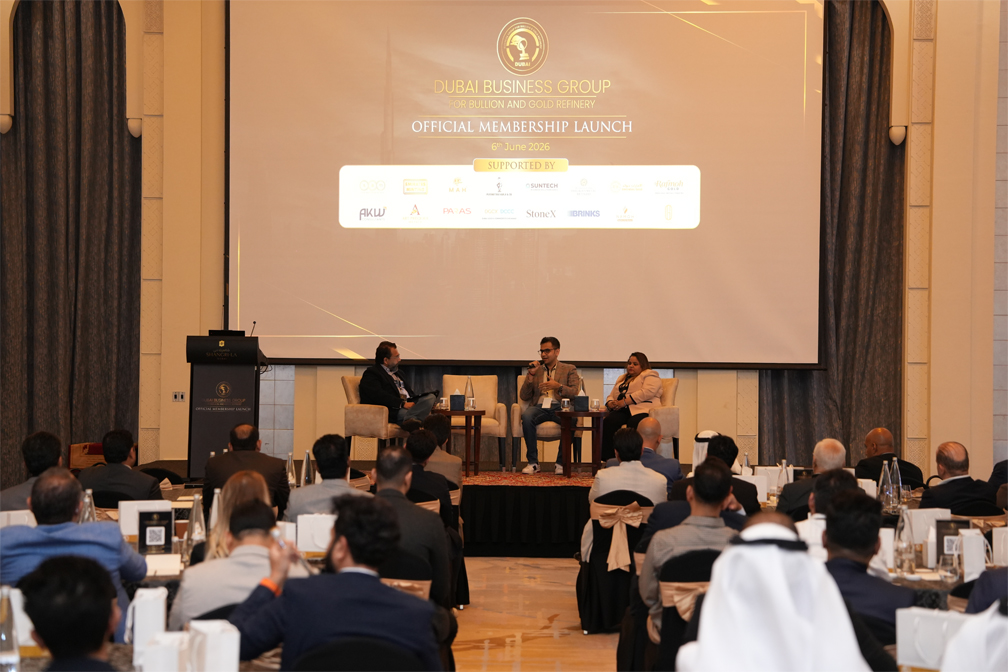
Talking about industry issues is one thing. Tackling them in the room is another, and DBRG used the evening to do exactly that. A fireside chat moderated by FinMet’s Pramod Mohan, with AKW’s Manali Chopra and Suntech’s Tushar Gupta at the table, took on one of the most pressing regulatory shifts facing the sector: the UAE’s incoming e-invoicing framework.
For bullion businesses, the implications run well past paperwork. Unfixed pricing, provisional and final settlement invoices, purity and assay data: the gold trade carries complexities that standard e-invoicing systems were never designed to handle. Getting it wrong is not a clerical risk. It is a compliance one.
Tushar Gupta, Executive Director at Suntech Business Solutions, made the case that the shift is an opportunity rather than a tax. “Compliance is something that has only increased since 2018. What it does for businesses is give them a chance to formalise their processes. It only improves governance and increases confidence. Among government, finance providers, suppliers, everyone is able to trust the businesses more.”
The session was followed by an open house, with Sudheesh Nambiath leading a “Voice of the Industry” segment that put members’ questions straight to DBRG’s leadership. The message from the floor was clear. The industry has no shortage of concerns. What it has lacked, until now, is somewhere to take them.
Compliance as a competitive edge
Underneath the practical discussion sat a bigger idea, one the wider trade is only starting to absorb: that compliance is shifting from a cost of doing business into a reason customers and partners choose you. Chairman Mohammad Ayyob put it in foundational terms. “Sustainability and compliance. If you want to achieve something, the baseline should be compliance. Compliance is the pillar and it’s the key to success.” Coming from a founding board member rather than a regulator, the framing carried weight in a room full of operators.
What success looks like
For DBRG’s founding board, the launch is a starting pistol, not a finish line. The genuinely hard work is still ahead: building trust, instilling new habits, and growing the institutional muscle that turns a launch event into a functioning industry body.
Shabnam Ebrahim, General Manager, kept the definition of success refreshingly human. “Success is to ensure that all those who become our members, our founding members, have a voice. And we are going to do our very best to be that voice for them.”
Ayyob was honest about the size of the cultural task. “Changing culture, bringing all of them together, making them used to having one voice, uniting them, earning their trust. That is the first challenge for DBRG.”
DBRG is betting that with structure, governance and a single unified voice, the next chapter won’t take nearly as long based onthe vision and mission of the DBRG is :
Vision: Retain and grow UAE’s leadership position in global bullion and refining trade. Create an ecosystem that is Sustainable, Measurable, Adaptive, Resilient and Transparent (SMART) which is Inclusive and Collaborative.
Mission: Advocate for growth, compliance, and innovation. Empower businesses with education, networking, market access and best practices.
On the evidence of the room at the Shangri-La, with banks, refiners, traders, logistics firms and consultants in the same conversation, many of them for the first time, that bet looks a good deal less speculative than it would have a year ago.